
A glasshouse is a permanent structure with high-value crops, so the watering system has to be planned around the building, the crop and the climate inside it. Sitetech designs, supplies and installs glasshouse irrigation systems for commercial growers across the UK, working from our base in Lancashire.
We plan watering together with climate control, storage and aftercare, so each part works to the same design. If you grow without soil, see our hydroponic irrigation systems page. For polytunnels, nurseries and general greenhouse watering, see greenhouse irrigation systems.
In short: a glasshouse irrigation system delivers water, and where needed feed, to crops growing inside a permanent glass structure. It combines pumps, filtration, pipework, zone valves and a controller, and is designed around the house layout, the crop and the climate controls it has to work with.
"*" indicates required fields
A glasshouse is built to last, and crops often stay in it for long periods. Pipework, benches, gutters and heating all share the same space, so changes are harder once the building is up.
General context that shapes the design:
For that reason the first step is a visit to the house, not a parts list. We want to see the layout and the crop, and talk through where your water comes from and how hands-off you want the watering to be.
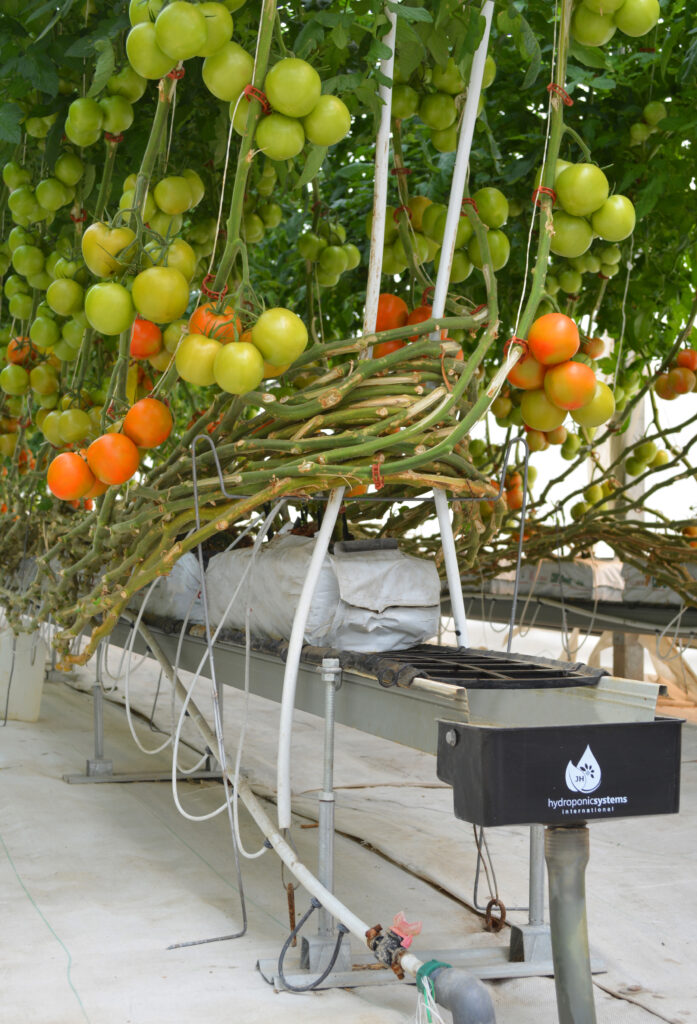
Most glasshouses combine more than one delivery method, and we design each zone around its crop. These are general pointers, and the right mix is settled at the design visit.
Drip irrigation puts water at the root of each plant, so it is a natural fit along benching or for potted crops in a house. Filtration deserves attention, because a blocked emitter usually traces back to the filters.
Overhead sprinkler systems cover a whole bench or floor bed at once, and fine misting suits propagation areas where humidity matters.
One bay can run on drip while the next uses overhead watering. Giving each zone its own valve and schedule means one area can be watered while another stays dry.
In a glasshouse, watering and climate affect each other. Heat, light, ventilation and humidity all change how much water a crop uses, and watering in turn changes the humidity around the plants.
That is why we design irrigation and climate together. As the main UK distributor for DGT by Senmatic, we supply and install their climate control systems, so watering can respond to real conditions inside the house rather than running on a fixed clock.
Our project work includes a turnkey strawberry greenhouse, where watering control was planned together with the screens, ventilation, CO2 enrichment and heating. You can read more about DGT by Senmatic and the range we supply.

Many glasshouse crops are fed through the irrigation line, so the controller and the water quality both matter.
Our DGT irrigation and fertigation systems include the AMI Simplex for small and medium-sized houses and the AMI Penta for larger or more demanding sites. The VA Penta Irrigation Controller handles valve control on its own where you do not dose fertiliser through the system. The Mesur hand instrument lets you spot-check EC, pH and temperature, so you can see what is reaching the crop.
Between crops, clean pipework and filters help keep emitters clear and delivery even. We specify filtration to suit your water source, and we can include your controllers and fertigation equipment in a service visit. Winter is the natural window, because the crop is off the system and anything found can be put right before spring.
Many growers already have a house with some watering in place. In that case we start by looking at the pipework, pumps and water source you have, and we specify equipment that fits around whatever is in good condition.
Upgrades can be staged zone by zone where that helps, so the crop stays in production while the work goes on. We plan the installation around your cropping and work to keep disruption to a minimum.
This is usually a good fit for:
Where a range has several bays, each can sit on its own valve and schedule, so a change in one does not disturb the others. Modular components leave room to add zones later.
A glasshouse has a large roof, and rainwater from it can feed irrigation. Rainwater is generally low in dissolved minerals, and harvesting it is a regular part of the glasshouse systems we design. A good number of them run wholly or partly on rainwater, with filtration and storage planned in from the start.
Rain often falls when crops need little water, so it has to be stored until it is needed, and a backup source is usually sensible. How much of your demand rainwater can cover depends on your roof area, your rainfall pattern and your demand.
We size water storage from your peak-day demand and your source’s reliability, with pumps and controls planned alongside it.
Tell us about your glasshouse, what you grow and where your water comes from, and we will design the system around it. We are a family-run Lancashire firm, and the same small team handles design, installation and aftercare.
Contact Sitetech to arrange a site assessment or design visit.
It is the pumps, filtration, pipework, valves and controls that deliver water to crops inside a glasshouse, designed around the structure, the crop and the climate controls it works with.
Often, yes. We look at the pipework, pumps and water source already in place and can stage the work zone by zone, so the crop stays in production during the upgrade.
Yes. As the main UK distributor for DGT by Senmatic, we design watering alongside their climate control, so it can respond to conditions inside the house.
Yes, in many cases. A good number of our glasshouse systems run wholly or partly on rainwater. It needs storage, filtration and usually a backup source, sized to your roof and demand.
It depends on the size of the house, the crop, the level of automation and your water source. We price each project individually after a design conversation.
Yes. We are based in Lancashire and work with growers across the UK, from site assessment to installation and aftercare.