
Above ground water tanks are generally quicker and cheaper to install, easier to inspect and simple to expand later, while underground tanks free up surface land, keep stored water cooler and reduce algae growth but cost more to install and are harder to access for repairs. The right choice for your farm, nursery or glasshouse comes down to available space, budget, water quality needs and how the tank will connect into your wider irrigation setup.
How Above Ground Water Storage Works
An above ground tank sits on a prepared base, usually concrete or compacted stone, and is filled either by gravity from a header source or by pumping from a borehole, mains supply or rainwater harvesting system. Tanks of this type are typically made from steel, GRP or polyethylene, and because the whole structure is visible, checking water levels, spotting leaks and carrying out routine maintenance is straightforward.
Above ground tanks are also easier to add to an existing setup. Whether your operation relies on drip irrigation across polytunnels or overhead sprinklers in open fields, a visible tank close to the point of use gives you a simple, accessible water source that can be expanded with additional tanks if demand grows.
How Underground Water Storage Works
Underground tanks are buried below ground level, usually in concrete or reinforced construction, and are fed and drawn from via pipework and an access chamber rather than a visible vessel. Because the water sits below the soil surface, it is shielded from direct sunlight and large swings in temperature, which helps reduce algae growth and can keep water in better condition over the growing season.
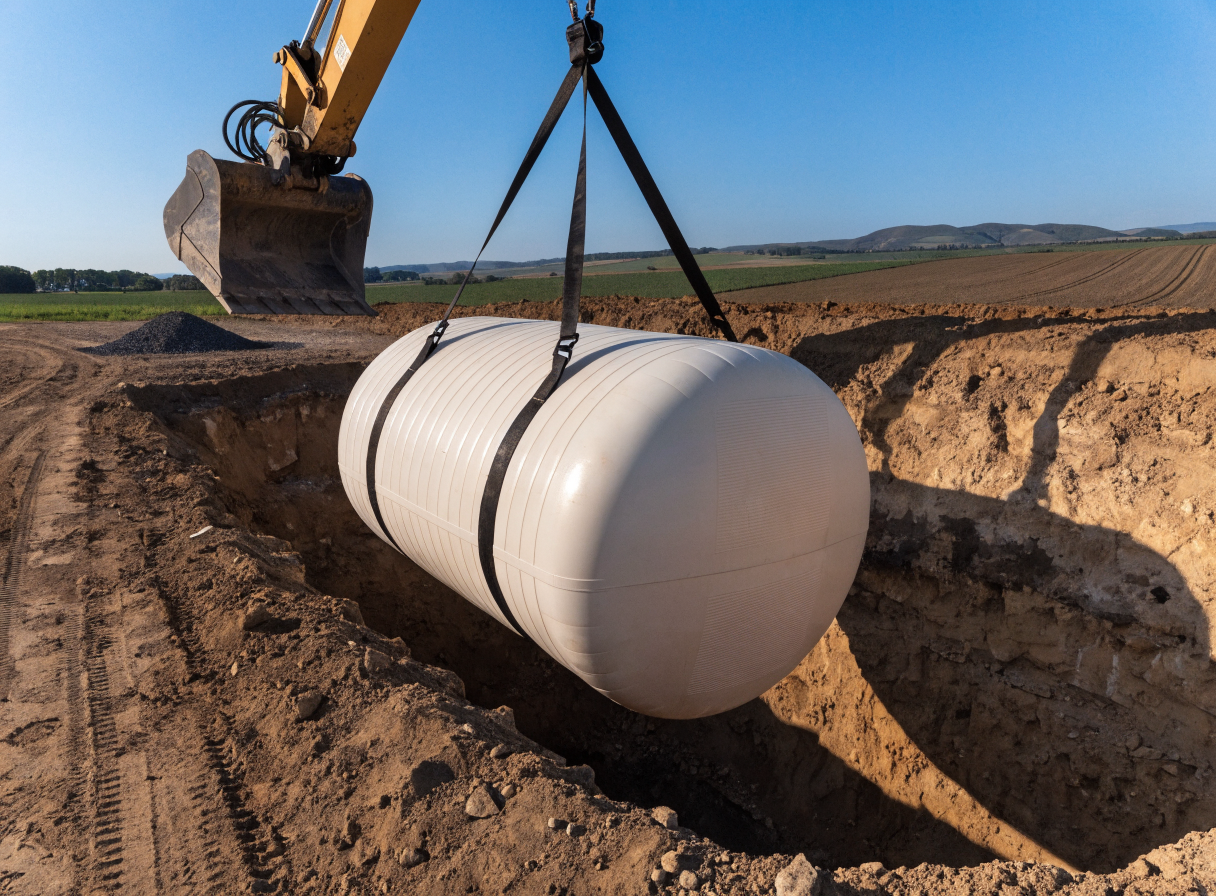
The main trade off is access. Installing an underground tank means excavation work, and any future inspection, repair or expansion is more disruptive than with a surface tank. Underground storage usually also needs a pump to lift water back up to the irrigation system, so pump sizing and reliability become more important considerations.
Comparison Table
| Factor | Above Ground Tank | Underground Tank |
|---|---|---|
| Installation cost | Generally lower | Generally higher |
| Land use | Takes up surface space | Frees up surface space |
| Water temperature | Can fluctuate with the weather | Stays cooler and more stable |
| Algae growth | More likely in direct sunlight | Reduced, as light is excluded |
| Access for maintenance | Straightforward | Requires excavation or an access chamber |
| Future expansion | Easy to add further tanks | More disruptive to expand |
| Visual impact | Visible on site | Hidden below ground |
Which Option Suits Your Farm or Nursery?
If land is tight and every square metre of growing space matters, an underground tank can be the better fit, particularly on sites where surface space is needed for polytunnels, glasshouses or vehicle movement. Where space is less of a constraint, an above ground tank is often the more practical starting point, since it costs less to install and is far easier to maintain, inspect and extend as the business grows.
Water quality is another factor worth thinking about. Growers who are sensitive to algae build up, particularly where water feeds fine drip lines or misting systems, often prefer the more stable, shaded conditions an underground tank provides. Budget, timescale and how quickly the tank needs to be up and running before a growing season also tend to tip the decision one way or the other.
Getting the Sizing and Design Right
Whichever type of tank you choose, storage only earns its keep as part of a properly designed system that takes account of daily demand, pump capacity, pipe runs and how the tank ties into pumps and controls elsewhere on site. Undersized storage leaves you short during peak demand, while oversized storage adds unnecessary cost and, in the case of underground tanks, unnecessary excavation.
It is also worth looking at water storage solutions as a whole rather than in isolation, since tank type, pump selection and pipework layout all affect one another. Getting this combination right from the outset avoids costly changes later, particularly once a tank is buried and no longer easy to alter.
Frequently Asked Questions
Can I convert an above ground tank site to underground storage later?
It is possible, but it usually means new excavation, groundworks and pipework rather than a simple swap, so it is worth thinking through long term space needs before the first installation.
Do underground tanks always need a pump?
Most underground tanks need a pump to lift water up to the irrigation system, since gravity alone rarely gets water from below ground level to where it is needed.
Which type of tank lasts longer?
Both types can have a long service life when built from suitable materials and properly maintained; lifespan depends more on construction quality and upkeep than on whether the tank sits above or below ground.
Can I use a mix of above ground and underground storage?
Yes, some farms use underground storage for a stable base supply and above ground tanks for additional or seasonal capacity, particularly where space allows for both.
Do underground tanks need planning permission?
Requirements vary by site and local authority, so it is worth checking with your local planning department before excavation work begins.
Conclusion
There is no single right answer between above ground and underground water storage. It comes down to the space you have, your budget, water quality priorities and how the tank fits into the rest of your irrigation setup. If you are weighing up options for a farm, nursery or glasshouse in Lancashire or further afield, our team can talk through what suits your site before you commit to a tank. Get in touch to discuss irrigation system design and installation with a team that works across water storage, pumps and irrigation as one connected system.